Friday, March 9, 2012

Thursday, March 8, 2012
whitty reviews
The three reviews I looked at all work together in a way despite their differences.
http://www.whitmanarchive.org/criticism/reviews/leaves1855/anc.00013.html
this review looks at Whitman in a positive light- almost more than human (just like the kosmos.) BECAUSE Whitman wrote it. This piece starts out by saying that in order to understand a poem we must understand the author, so what better to do so than by reading what the author wants you to think? He touches on some major themes in : He does not celebrate what is conventional, a man of American breed, the everyday rather than the elite, etc. but these are all things that are relative to the writer. Unlike the proper civilized "english"poet, whitman judges himself on his qualities that are the opposite of the proper. We distinguish language through differences; we distinguish whitman for being different than his contemporaries. “This poet celebrates himself: and that is the way he celebrates all. He comes to no conclusions, and does not satisfy the reader. He certainly leaves him what the serpent left the woman and the man, the taste of the tree of the knowledge of good and evil, never to be erased again.” He spends some time on the image of Whitman- the face- the calm and unrefined. This review focuses on the new aspects that Whitman utilizes, that are different from his contemporaries and views it as a good thing. The first review, although appreciated the writing to a degree, could not look past it in order to see th positive. This response looks only at the positives, only at what Whitman wants the readers to see. It is as if he is trying to sensor what is said about the book-by writing his own reviews and sending positive reviews to critics. These three writings deal with the way in which Whitman attempted to flood the literary world with his own words of critique. This is not a bad thing- we are all our own worst critic- it would be fitting for Whitman to critique himself in order to improve, but it seems like he is only giving positive feedback (perhps because it is a public community rather than revisions he can make when he is honest with himself.
http://www.whitmanarchive.org/criticism/reviews/leaves1855/anc.00013.html
this review looks at Whitman in a positive light- almost more than human (just like the kosmos.) BECAUSE Whitman wrote it. This piece starts out by saying that in order to understand a poem we must understand the author, so what better to do so than by reading what the author wants you to think? He touches on some major themes in : He does not celebrate what is conventional, a man of American breed, the everyday rather than the elite, etc. but these are all things that are relative to the writer. Unlike the proper civilized "english"poet, whitman judges himself on his qualities that are the opposite of the proper. We distinguish language through differences; we distinguish whitman for being different than his contemporaries. “This poet celebrates himself: and that is the way he celebrates all. He comes to no conclusions, and does not satisfy the reader. He certainly leaves him what the serpent left the woman and the man, the taste of the tree of the knowledge of good and evil, never to be erased again.” He spends some time on the image of Whitman- the face- the calm and unrefined. This review focuses on the new aspects that Whitman utilizes, that are different from his contemporaries and views it as a good thing. The first review, although appreciated the writing to a degree, could not look past it in order to see th positive. This response looks only at the positives, only at what Whitman wants the readers to see. It is as if he is trying to sensor what is said about the book-by writing his own reviews and sending positive reviews to critics. These three writings deal with the way in which Whitman attempted to flood the literary world with his own words of critique. This is not a bad thing- we are all our own worst critic- it would be fitting for Whitman to critique himself in order to improve, but it seems like he is only giving positive feedback (perhps because it is a public community rather than revisions he can make when he is honest with himself.
this review starts out with the means in which they received
Whitman’s book, “bound in green.” Whitman, apparently, sent the book along with
review clippings- all good reviews. More than good really, they established
Whitman as a true American - "Not the refined life of the
drawing-room—not dancing, and polish, and gentility, but some powerful
uneducated person, and some harsh identity of sound, and all wild free forms,
are grateful to him."It is
a sort of meta-criticism while using the provoded reviews as a way to help
evaluate their review. Although this review chooses to burn Leaves of Grass due
to its obscenity, it shows us a way to critically look at these reviews. Now,
we all knew Whitman made reviews of his own book, but knowing that he also
provided critics with a collection of his personal favorite reviews of his work
distorts the review. By even sending these pieces of writing along with the
book implies that the critic is not reviewing Whitman’s work, rather the
opinion of others, disconnecting the critic with the work. I always live by the
standard “don’t read any criticism/reviews until one day after having seen/read
etc.” This helps give you time to marinate your own ideas rather than the
thoughts of someone else. Once you read a critique of a book, you can’t get the
thoughts of the critic out of your head- you are no longer free of external influence
(to the possible extent.)On the other side, this review casts off
glowing reviews by highly respected people under the complaint of obscenity. If
it weren’t for the obscenity the poem would be good by their accounts ( I
assume.) In this case, obscenity is never good or redeemable. I would assume
that this review came from some religiously informed person, or at least someone influenced by the British proper. They notice the
lines put together, but don’t notice anything past the obscenity. The matter of obscenity is questionable- what did they find obscene? By adding the obscenities, would they be at the same level as the disdained Whitman? Is his slang obscene? Is his content obscene? Do they all work together to make it so? By reading the poem as obscene, they read whitman as obscene rather than proper- american vs english.
Plesant quiz marked an awareness of what Whitman was trying to do, showing that it was not a valid
Plesant quiz marked an awareness of what Whitman was trying to do, showing that it was not a valid
Referring how Whitman reviewed his own work -
that such a review was not worth anything
if the endorsed is the endorser. Why
should Whitman conform to not reviewing his own work? He proved to rub the
grain a different direction, so was this expected?
Whitman was not as highly regarded by his
contemporaries as he is today, but he was not completely loved or hated.
Sidenote: It was mentioned in class that the volume of reviews proved something about literature in Whitman's period, and yes it does, but I think we missed some important points. Reviews for literature are relevant today and perhaps even more of them exist. The internet has allowed for everyone to be a critic, democratizing (not completely, one would need access to a computer still) the reviewing system. You can type in the name of one book and find reviews on blogs, bookselling sites, twitter even. Now essentially anyone can make a review and anyone can read a review. This also ties in with Fanny Fern's review of Whitman and how she was interested in his D.I.Y approach. This approach has become even more powerful in our time due to the rise of the internet. For example, Cassava Press found some of their authors through their blog writing. Plenty of bands have been found through internet music sites, and are apart of the DIY music scene- uninfluenced by the label or management- the bands (usually one person) makes the music themselves, in their room and on their computer. The internet allows anyone to be a published (in a sense) author/musician/artist etc.
Thursday, March 1, 2012
Franny and Walty
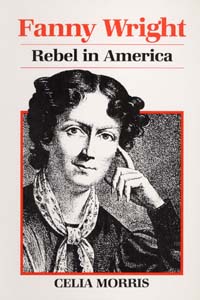
Francis Wright, an immigrant from Scotland, was a
progressive thinker who spoke powerfully on the rights of women, abolishing
capital punishment and more. She was well received in New York and found it to
be a haven for her way of thinking.
Whitman was
entranced by Francis Wright’s oratory style. She was an amazing speaker and
Whitman recognized how the performance of one’s ideas could be just as
important as the idea itself or at lest a necessary part for the execution of
the idea. Not only was Whitman a fan of her style, but also of her ideas.
Wright wanted to preserve the union just as Whitman did. They both seemed to
understand that change was going to come in terms of slavery, so rather than
create a stark division she advocated a gradual one. She established the
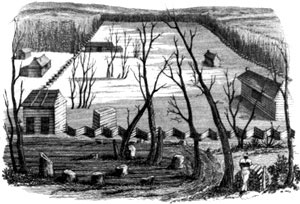
Nashoba community, which was her utopian idea of how to abolish slavery. Her
idea promoted the white southerners as teachers of the black ex slaves,
teaching them about freedom (…).
Whitman believed that she was always working to help better
the community with ideas that aligned more with a progressive agenda. Just as
Whitman transgressed the boundaries between high brow poetry/poets with (certain
editions specifically) leaves of grass, Wright transgressed the socially
acceptable topics for a young woman. She was also involved in Robert Dale Owen’s
socialist settlement in Indiana where she spoke strongly against organized
religion and advocating a greater gap between church and state.

a song or occupations
He writes the poem in a way that hovers on the lines of
accusatory. He states one thing the reader may assume as a truth for
themselves, balanced with a line stating that Whitman also takes part in the
same activities and whatnot as if expecting the reader to maintain a dialogue
with walt arguing this claim. Between the 1855 version and the 1856 version, he replaces
the ellipses with dashes: what is not said, the unknown and impossible vs. the
abrupt connection of thoughts. The dashes are more harsh, but also more
assertive. The ellipses, although they leave room for thought (more democratic
– more input from the reader?) they also are less grounded and are subject to
change. What is not being said and why is it not being said? The dashes allow
Whitman to push the thoughts of the reader along a certain path and also
enhance the accusatory “vibe.”
By the 1860 edition (titled chants democratic), he begins to
emphasize specific groups of people “men and women” “American Masses” etc.
Similar to Song of Myself, Whitman continues to catalogue and connect certain
stanzas with certain types of people. He adds new lines in the second part of
the poem, providing more about his solidarity with the working class. “If you remember your foolish and
outlawed deeds, do you think I cannot remember my own foolish and
outlawed deeds? plenty of them; “ He adds “plenty of them;” with a semi
colon. This implies that the following statements have a closer connection to
his foolish outlawed deeds, but I don’t understand what the significance of
this is. Is he implying that his loving of strangers is foolish? That
everything he speaks of in the poem is foolish, or perhaps outlawed – too
progressive?
The 1867 edition carries a shortened
title that just says “To Workingmen” as though it is not a poem in a book being
sold for profit, rather a letter (of wisdom?) to the disenfranchised laborers. The
earlier title, “Poem of The Daily Work of The Workmen and Workwomen of These
States” implies that the poem is about something, an observation with a
varying, higher class, audience. By entitling it “To Workingmen,” he is taking
the authority away form the upper classes and bestowing it upon the lower
working classes. It is addressed to a group rather than being about that group.
He adds “This is the poem of occupations; In the labor
of engines and trades, and the labor of fields, I find the developments, And
find the eternal meanings.” He takes the original name, uses it in a stanza to
create a more concise purpose for the poem.
Whitman’s persona shifts from intellectually thought
provoking prose to reading that requires less work from the reader. Not that it
doesn’t require any, it just requires less – like it is no longer a poem a tool
but as a pamphlet (similar to the alterations in punctuation in Song of Myself
change the way we can interpret the poem – consciously or subconsciously.) Perhaps
this aligns with the self confidence of Whitman; his writing didn’t have to be
open ended – he could be more firm with opinions.
Thursday, February 23, 2012
From Broadway to Bowery
Bowery culture was a contradiction of actuality and desire. In reality, these people were of the lower working class, yet they took pride in a vibrant "arts" community. They were tough dandies. They remind me of the Sapeurs of the Congo in Central Africa. They dress beyond their means (usually to portray an image of how they want to live) juxtaposed with poverty. Both have distinct representations of the self that contradict their actual positions in life (perhaps detracting the importance of dressing nicely for the higher classes-if the working class can do it, how different are we?)
Thomas Higginson criticized Whitman by stating that he would fit in with the effeminate Bowery as opposed to a masculine community. The Bowery, once a vibrant community of the lower working class(masculine and effeminate), at the time Higginson wrote, was more known for the “fairies” of the community. Higginson specifically noted how offended he was that Whitman chose service in the hospital rather than on the field – the communal grounds of death. From reading Song of Myself, he believed Whitman would have been the manly hero, saving the nation, but Whitman was a nurse. What Whitman portrayed through his writing and what he actually did were not seamlessly connected. Sometimes, Walt was a contradiction, sometimes he wasn’t. The major point to understand about this set of criticism, is that Whitman claimed himself as masculine, and an outsider’s perception did not match Whitman’s projection of himself.
Thomas Higginson criticized Whitman by stating that he would fit in with the effeminate Bowery as opposed to a masculine community. The Bowery, once a vibrant community of the lower working class(masculine and effeminate), at the time Higginson wrote, was more known for the “fairies” of the community. Higginson specifically noted how offended he was that Whitman chose service in the hospital rather than on the field – the communal grounds of death. From reading Song of Myself, he believed Whitman would have been the manly hero, saving the nation, but Whitman was a nurse. What Whitman portrayed through his writing and what he actually did were not seamlessly connected. Sometimes, Walt was a contradiction, sometimes he wasn’t. The major point to understand about this set of criticism, is that Whitman claimed himself as masculine, and an outsider’s perception did not match Whitman’s projection of himself.
At one point, Whitman said that he could fit in on Broadway
to Bowery implying how versatile he was – how he could transcend class
boundaries - Broadway being highbrow theater while the Bowery was a lowbrow version of something the upper classes enjoyed. Higginson is calling the affirmations made in Song of myself to
question. Is Whitman really what he preaches? Was Whitman once a reflection of
his writing and through his many revisions, has changed? Like the Bowery, once
maintaining a manly aura and shifting to an effeminate one, has Whitman also
shifted?
Tuesday, February 21, 2012
blew book
I have been
looking at the progression of lines from “This is the grass that grows wherever
the land is, and the water is; This is the common air that bathes the globe”
and onward. In the blue book version, W.W. has marked the area to death. He
crossed out whole stanzas with possible new stanzas or revisions of what was
already there. On page 56, he crosses many lines out and revises certain
sentences, yet none of this appears in the 1867 version. What takes place of
these half a dozen lines, is a line or two that has no evidence in his notes.
He extracts lines that catalogue all type of people, while preserving the line
“I play not marches for accepted victors only—I play great marches for
conquer'd and slain persons.” Further down the page, Whitman rewrites “I beat
triumphant drums for the dead” which is noted for revision and actually revised
just as he marked- “I beat AND POUND drums for the dead.” It is such a minute
change, yet it was made, like many of his notes prove.
He altered
lines, deleted, added – gave his poem a facelift- all to mirror how he felt
about what he had written. It is interesting to compare these versions because
it provides insight to the spirit of Whitman. Whitman (like all) was changing
as a person, so why couldn’t his creations? The capricious nature of creation
is not to be preserved, but observed - allowed time to grow.
wishy washy walty?
The first edition of Leaves of Grass did not burst onto the
market and into the homes of folks. It was not in high demand, but Whitman
wanted it to be- he wanted it to be carried around with all- physical or
mentally. Like anything (ex. Movies) with potential, it is revised and redistributed
as something familiar and also something new and different. I actually don’t
have the 1855 version of the book (I ordered the wrong copy) and it’s been
difficult for me to find it online in a way where I could accurately note the
differences. From what I understand, his poems were originally title-less and
the copy was much slimmer. Since then, he added more poems stretching the size
of the book while altering what was already in the book. I have noticed that
Song of Myself is altered in ambiguous locations (from what I’ve gone over) and
the thought is there but my copy has a few more words here or there. It’s
interesting that these differences DO create a new text, a modification. Some
of the differences may be slight, but they alter the context and
interpretation. He had more creative control with Thayer and Eldridge (1860)
designing a more involved cover etc. He used this control to draw upon the idea
of being one with nature, using a butterfly, sunrises and more ethereal
subjects from nature.
Whitman
begs me to wonder: is there a true edition? Nabokov did a similar process with
his novel Despair. He had his
original edition, his English translation and then a revised edition later on. What
does it mean for an author to alter what he/she writes, why can’t they? I asked
my friend (an extremely talented art professor in my opinion) if he finished a
painting I had seen him working on. He simply told me that no painting was ever
really done, that they are all a work in progress forever. He worked with oil
paints which take several days to dry, allowing for the artist to come back the
next day and continue manipulating the painting as if there was no lapse in
time. This ability to alter also distinguishes the painting as delicate- the
paint can literally be wiped off the canvas, erasing all the work. As I took up
painting for fun, I realized he was right. I literally leave certain parts of
my paintings unfinished in order to keep that window open. (There is a small area here that is always left undone- it is reassuring to know that I can still change something.)

I haven’t sprayed
any sort of fixing agent on my paintings – they are not fixed. I think Whitman and company
enjoy the freedom to change their mind, to change a word – add and subtract.
Perhaps Whitman pioneered the idea of art as a process never to be finished.
There can be no one true version because every version is true; they all
represent an aspect of the complexities within the human who created it.
Subscribe to:
Posts (Atom)